
Hands in the Engine
Grant Gets South Students FAA Ready
In aviation maintenance, hands-on experience is not optional. It is essential. Thanks to a grant from the South Seattle College Foundation, students in South’s Aviation Maintenance Technology (AMT) program are gaining valuable real-world experience while helping modernize critical training equipment used throughout the program.
The grant funded the replacement and upgrade of engine ignition and starting system components, including ignition harnesses, magnetos, and specialized testing equipment. These systems are central to aircraft engine operation and are required training components under Federal Aviation Administration (FAA) Airman Certification Standards. Prior to the upgrades, several training engines were limited by aging equipment and needed replacement parts before students could fully use them for instruction.
For Chris Barnes, Aviation Maintenance Technology faculty member, the project represented more than a maintenance upgrade. It created an opportunity for students to learn by doing.
"Having our students complete the installation of this needed equipment helped them get the FAA-required experience for removal and installation, testing, and timing reciprocating engine ignition systems," Barnes shared.
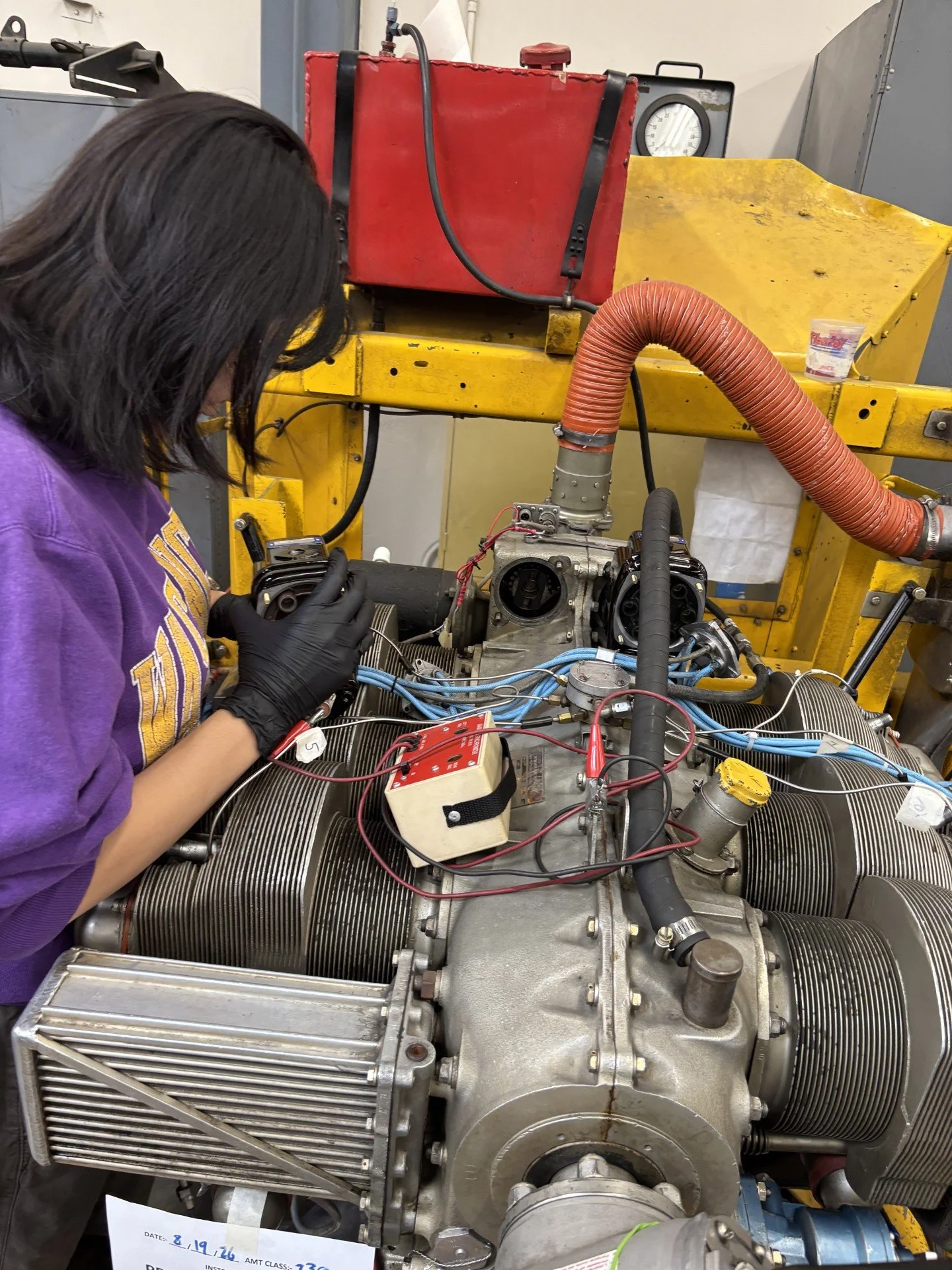
Students in the AMT 230 Advanced Powerplant and Inspection participated directly in the project, removing aging ignition components and installing new magnetos and ignition harnesses on the training engines.
The course serves as a culminating powerplant class and prepares students to take the FAA Powerplant examination after completion.
The Aviation Maintenance Technology program plays a vital role in preparing the next generation of aviation maintenance technicians. As experienced technicians retire and aviation fleets continue to expand worldwide, demand for skilled aviation maintenance professionals continues to grow. Maintaining current equipment and providing students with relevant, hands-on experiences is critical to meeting both industry and FAA requirements.
The Foundation-funded equipment supports student learning outcomes, including troubleshooting and repairing ignition systems, inspecting electrical starting systems, testing ignition components, and safely working around aircraft engines. These are core competencies required for FAA certification and success in the aviation workforce.
Today, nearly all of the new equipment has been received and installed. Students have already benefited from working with the upgraded systems, and the equipment will continue serving future cohorts as they move through the program. Barnes noted that the project has already had a significant impact.
"This has been a huge help this quarter and will continue to help our team teach our students and keep them safe."
The project is an excellent example of how Foundation support strengthens student learning in tangible ways. By investing in modern equipment and hands-on training opportunities, SSCF donors are helping students develop the skills, confidence, and experience needed to enter one of Washington state's most important industries.
For Aviation Maintenance Technology students, the grant did more than replace parts. It helped ensure that their education remains connected to the realities of today's aviation industry, preparing them to keep aircraft safe, reliable, and ready for flight.